Saturday, June 8, 2013

Red-billed Blue magpie: Enchanting bird of Himalayan foothills


 It is difficult to miss this corvid that inhabits along the Shivalik, and rather common in the upper reaches. A striking looking large bird that appears straight out of fairytale. Red-billed Blue Magpie aka Urocissa Eythrorhyncha has everything that is arresting to the sight – a mix of red, purple, blue, white, orange, black and what not, add a long blue white corrugated tail and you get magpie of the hills!

Found this pretty one delectably placed against the faint sun on a morning walk, along the downhill of Dhanpo village that had a patch of jungle. The mountains hills are stripped of trees, I was told that the hills here had huge trees once but were logged and transported to Delhi during colonial period. Wondering how they transported these all the way to delhi? The serpentine river Yamuna, the faint roar that I could hear, hold the key. During monsoon the in spate river was also carrying loads of premium cargo that were properly tagged as it reached the plains. 

Dhanpo: Jaunsari hamlet in the hills


Dhanpo is a quaint little tribal hamlet near to Lakhwad village ensconced in lower Himalayas. It’s about three hours from Dehradun, towards Chakrata. Public transport system is minimal; I had to travel on the top of a jeep on a road that had deep ravines on one side and a determinantly vicious driver on the wheel. Not for faint hearts!! Narayan Singh Tomar is popularly referred to as Netaji, and he surely is one, was the person I contacted over phone. A man who immensely enjoys talking, talking may not be the right word but monologue as if he is addressing a gathering. He needs cue to start during which he will observe you closely from toe to head and may even exchange pleasantry with passerby, to make it worse, can meander away from the issue in focus and return at will.  To his favour I must add the man has zest and energy of a doer, an organizer.  He amply demonstrates these during get together. He introduced me to the gathering “as the man who will take Dhanpo to the world through computer” and performed the enviable task of explaining internet to largely illiterate audience. This included distorting his hand into representation of a globe and moving his finger to and fro as if to explain whereall Dhanpo will be heard, to an awe struck audience. I, in the meanwhile, was making keen attempts to sink into ground via underneath the table!!         


This is Jaunsari-Bawar belt, and Dhanpo is a Jaunsari tribe settlement. Jaunsari is a corrupted name of Jamnapar, as Jaunsar region is on the other side of Yamuna river. I tried my best to know about Jaunsari tribes from the inhabitant but the information is sketchy. Few days later I visited Anthropological Survey of India library at Dehradun and gathered few information from various books.


Jaunsaris are mainly concentrated in Dehradun region; they are combination of various groups of polyandrous community (that includes Koltas, Bajgis and Khasas) living in geographical region. They speak Jaunsari which belongs to the family of Indo-Aryan languages, they also know Hindi. Till recently fraternal polyandry was in practice. What makes Jaunsari tribes interesting is the belief that they are descendent of Pandavas, as fraternal polyandry has been existing for ages until ofcourse the Hindu marriage act!!   They are primarily dependent on agriculture and animal husbandry.  In the pecking order the Khasas are at the top, and acquire Hindu caste influence, therefore play a dominant role in matters. Khasas are land owning, the other sections, in particular Koltas, were treated as bonded labours, indeed till recently prohibited from owning land therefore exploited. I was reading that a study conducted in 1980s found that 31 villages in Jaunsar-Bawar belt had instances of Kolta women trafficked to the plains by Khasas (Dr.DPS Khanna, Garhwal Univeristy). Though patriarchal, women play an important role most likely as an influence of once prominent polyandry. A day later I was up hill at Chakrata talking to Mr Kriparam Joshi, a retired principal of school and a man of immense knowledge about the culture of the place, who informed that Jaunsari tribes are the one of the few tribes in India who actively practices casteism, as Hindus do. He referred to it as bad influence as has happened with Christians and Muslims. Funnily as Jaunsaris are tribes they enjoy the status of ST so we have strange combination of “Brahmin Tribe” while the lower sections of Jaunsaris enjoy the status of both ST and SC. They mostly chose SC status for less competition in jobs, as the reservation is about 17% while ST is only 8%.      

 Though Jaunsaris are classified as Hindu tribes they don’t worship Hindu gods, preferring their own God, principal one being Mahasu. Neither in the characteristic of gods nor in the manner of worship have much semblance with Hindu practices, animal sacrifices are common.  Polyandry now seems nonexistent, though interaction with children at the village I gathered they refer aunts as mothers and so on. The only story that I gathered from the talk on Jaunsari was about their god Kailu, a temple located at the top of the hill. Kailu is a warrior god with sword in his hand. It so happened that many centuries ago a tyrant ruled the region, he asked for human sacrifice. The villagers were fed up and looked for savior. They were prophesized by power from above of a warrior in Kashmir but as they took the journey they realized there really isn’t any help. One day from the ant mound a figurine emerged who was to be their god and savior.     
       
The older traditional houses are double storey wooden and rather striking, though cavernous they keep the house warm in winter. Dhanpo has to its credit a tradition of what is now described as Organic farming. It is not a concept (which a news report –indeed BBC –was quoted as saying has no much nutrition difference than pesticide induced food!!) but a way of life. It is integrated in the outlook towards life. Every home has cows, buffaloes and goats; these are collectively assigned a space on the outskirts of the village. Each family has a shed called gowshala. It helps in that the village is maintained clean while defecate from the animals are easily collected and converted into manure. This then is distributed to plots that 40 odd families, that consists the village, hold for cultivation. There is also vermiculture pits, I was shown around by Ms Meena Devi who also is the President of SHG, she explained on medicinal values of some plants.   
      
Women of the village have taken the initiative to create a group called Durga Mahila Swyam Seva Samooh, the guest house where i stayed runs under their aegis. The women are refreshingly open and not unduly alarmed interacting with strangers. Most likely they haven’t really travelled in Delhi metros where the local guardians of government keep blaring every few seconds “not to talk to strangers” and so we have “all strangers” looking up and down with grim faces, no courtesy, no smile…ah back in the city. You will be a dead soul if this enters your being. And so a stranger dying on the street is just a stranger, from this pits also emerge self serving bleeding hearts, the paratroopers of issues! Delhi government is very clear on how to create ideal citizens. Though I understand the risks involved with strangers but these are never norms as is being attempted.    

 For once I too was quite comfortable and relaxed, with trusting people around there is peace in the being. Though initially I too was apprehensive and discomfited by easy nature of people, slowly it dawned that this is real, and I am in a very real world. And so while you have your dinner the women will gather around, ask a line about taste of food, as they discuss among themselves their private matters in jaunsari language. The unfortunate fallout of being on the quieter part of the human spectrum of social skills is that very soon you are nonexistent. But they were considerate to drop in a line like ‘aur kha lo’ ‘acha laga’ and so on. Though must add later I insisted on quieter surroundings and lesser people. On a late night I also had an experience of about a dozen women coming for a visit, they carried grains and lentils as gift. Anyone visiting Dhanpo (and they must) should be open to any kind of surprise. The facilities at the room are minimal but decent, the view is great, food is homely and yes organic. So if you are in Dehradun or Mussorie drop into Dhanpo for a day or two, and enjoy the hospitality of tribes of Himalayas, and ofcourse salubrious climate. 

The video posted at  http://youtu.be/WNukDWzvuwo is a night of get together that was arranged at the janmilan hall, wherein the women exhibited their zest for life and rhythm. What is incredible is that they are multifaceted…indeed these words are created. People are hardworking and do their work with dedication so in the morning you see them tending animals, carrying manure, climbing trees to cut leaves so on by mid noon they are cooking some really tasty food and later they are singing and dancing!!

Post script: things go wrong…
The above piece was written on the third day of my stay, I was about to leave but then I extended it by a day. The problem could be that, Indian villages are romantic getaway only for few days then the reality of surroundings barge in. Few kids happen to visit me where I was staying, while the regular kids were around. I asked about them, the kid shrugged, winced and said in appalling manner that they are from harijan basti. Little above Dhanpo is a few metres of no-man’s-land lies Harijan basti. It almost looks the same except that they are smaller and quieter, yes cleaner. Though small children are seen running around but I found teenage children and youngsters quieter lot. Elders subdued and avoided direct eye contact. I informed one of the elderly ladies who served me food and interacted everyday, about the appalling behavior of the kid. Till that moment a charming lady, she spewed “we never take food from them. I will never eat food prepared by them”. I said that is not right. A man who till now rarely spoke, shy manners, was regular presence found his voice and said vigorously “that is how god made them, they are no equals”. No wonder the kids treat these unfortunate children with such dislike, it is the elders who give the cue. Suddenly the pretty village, charming people and tasty food all got bitter for me. I don’t blame Dhanpo, it is only a microcosm of what is nasty India. These are the manners and attitude that is extended and seen in different contexts and views at the national level. The nasty India carries the seeds of incredibly mediocre India. As long as nasty India exists whatever pretensions Indians have at the high table of international relations about their caliber it will be just not enough since it is a byproduct of bias and cruelty. Such demarcations of villages on the basis of castes, these brahminical references should be made illegal. They created egotistic zombies out of otherwise ordinary compassionate people. And yes anyone visiting Dhanpo must also visit this section and enjoy their hospitality. I am sure no one has monopoly on hospitality and humbleness!!  
     
Despite these problems I reiterate you must visit Dhanpo atleast for the lead women have taken, their incredible passion for life and all the living that surrounds them. There is a quintessential compassion for life that is typically Indian. Dhanpo should be in the itinerary for anyone visiting Gharwal.  And yes in dance and celebration everyone come together…

Wednesday, May 8, 2013

The Duck story


 The Northern Pintail (Anas Acuta) is one of the most abundant winter migrant to the subcontinent, you will see gregarious flocks settling in the wetlands or water bodies in hundreds, sometimes within the city (I spotted few in the lake at Delhi zoo!!). It is a pleasure to watch them effortlessly float, preen, take a dip, sometimes almost stand on the water and fan its wings. The drake (i.e. the male) is rather charming looking bird-a white strip flowing through its chocolate colored head; the downward slant of its head makes it look as if shy. It has a long, pointed, central tail feather hence the name. Spotted this one at Yamuna Biodiversity Park (popularly YBP), this patch with a lake is now well protected also a dissemination centre so on, though I am not a big fan of Delhi but must concede the green cover and environment related concerns have increased. Cheers to that!!

Sandor Weores: The reader reads the poem but the poem also reads the reader 

 
Now I expend my life exultantly
like the oriole in the tree;
till it falls down on the old forest floor,
singing with such full throat its heart must burst and soar
 

What attracted me to Hungarian culture centre was an exhibition on photographs of birds –that too I saw the notice at the gate while passing through the route, and I came out knowing about Hungarian poet Sandor Weores (1913-1989). How wonderful!! It was an evening of poetry reading and talk on Sandor Weores, incidentally commemorating his 100th birth anniversary (conducted by Dr. Margit Koves). I really haven’t heard about this poet before so it was kind of a revelation. What made it special was the presence of niece of Sandor Weores –Ms Agnes Kriplani, she did an amazing presentation of recitation on pictures of nature. Weeks later I met her at the culture centre library, we got talking and she said “I am her kind of a person!!”. Wow now that surely is a compliment. 
A prolific poet, Sandor started writing at the tender age, when fifteen, he was published in leading journals of the time. Widely travelled he is also known for his work of translation from Chinese, Assyrian, Sumerian and Sanskrit. His poems were influenced by ancient Chinese poetry, Lao Tse, Upanishads, Babylonian epic, Egyptian hymns, Negro and Polynesian mythology (incidentally West should feel wrong in using words like Negro…we don’t have to carry their guilt). His works range from mix of classical and strains of folk, from simple nursery rhymes to sophisticated epigrams. The poems carried rhyme and rhythm, linguistic invention and verse melody, magical and language specific yet content defying meanings all in the serene harmony of poetry.        
                                                                                                               
The panic world is baffled at my gate;
‘Madman! Egotist! Traitor!’ its words beat.
But wait: I have a bakehouse in my head,
You’ll feed someday on this still uncooled bread


His poems were an effort in finding human beings place not only in the world but in the cosmos. Poet according to him “is the one who must retain the childhood, embryonic or perhaps even pre-conception quintessence of our being”.
 
Aphorisms

Word chases its meaning.
Dust hurries; stone takes it time.
Am I to take part in my own funeral?
You are here with your beautiful distance.
The tomb listens.
Coffin, naked virgin.
If born to your daughter, you are immortal.
The motionless approaches all the time.
Form is motionless, only its appearance dances.
Dangernightly.
Vapor thorn.
Icecomb.
Snowhorse.
Windcrystal.
Rustling water, sky.
They twine into a frameless looking-glass.
Here we lie, running around.
Your unknown selves.
Life is never alone.
For the second time the first gets lost.
Shadesong.

I am two, subject and object;
Only death can make me one.

More and more lonely gods.  

 
The Old Ones

They are so derelict, the old ones.

I watch them sometimes through the window
as they trudge home in an icy wind
with a back-load of firewood-
or in a panting summer
as they sit in the evening porch-
or on winter evenings by the stove
slumped in deep sleep-
they stand in front of the church
with palms stretched out in sadness, downcast,
like faded autumn leaves
in the yellow dust.

And when they stutter through the street
with a stick, even the sunshine looks askance at them,
and everyone makes it odd to say:
“How goes it, old man?”

The summer Sun,
the winter snow,
autumn leaf,
crisp spring flower
all pour an endless song in their ears:
“Life-cauldronful of old meat,
life-cartful of old hay,
life-candleful of gutted wax:
you are eaten up,
you are thrown away,
you are burnt to nothing,
you can sleep now…”

They are like someone
ready for a journey
and starting to pack.
and sometimes, when their gnarled hands
caress the blond hand of a child,
it must purely hurt them to sense
that these two hands,
hard-working hands,
blessing hands
are needed now by no one any more.

And they are already prisoners,
prisoners in chains, drowsy, apathetic:
seventy heavy years shackle their wrists,
seventy years of sin and grief and trouble,
seventy heavy years have chained them to wait
for a kindly hand,
a dreadful hand,
an unarguable hand
to give its command:

“Time now, lay it down”

 
Monkeyland is a poem that is mistaken for children’s poem, explained Ms Agnes Kriplani with a wry smile indicating tiredness with philistines invading the Net. The poem is a euphemism on state oppression during the time when authoritarian rule dictated people’s actions.

Monkeyland

Oh for far-off monkeyland
ripe monkeybread on baobabs,
and the wind strums out monkeytunes
from monkeywindow monkeybars.

Monkeyheroes rise and fight
in monkeyfield and monkeysquare,
and monkeysanatoriums
have monkeypatients crying there.

Monkeygirl monkeytaught
masters monkeyalphabet,
evil monkey pounds his thrawn
feet in monkeyprison yet.

……..

With moneysupper memories
the monkeyouthouse rumbles, hums,
monkeyswaddies start to march,
right turn, left turn, shoulder arms-

monkeymilitary fright
reflected in each monkeyface,
with monkeygun in monkeyfist
the monkeys’ world the world we face.

 
The Alchemist 

 
Roaming white speculative planes
and dulled to love’s transaction
he discounts his real passion
for those limits where rough life reigns.

He smiles on all invention
computing its weight as none,
accepts the dear objection
his own dense formulae own.

Icepacked in interstellar fury,
yet pure as the golden cygnet
drossed and dressed in mercury,

he roams to infinity, yet
back with fevered Iseult he
is Tristan seeking the first clue.


From my scribble pad… 

Learning English (and lessons on mediocrity)

At first I wore it as a garb
it seeped into my skin 
each cell battled invain.
The conqueror now chooses the thoughts

rearranges dreams
manipulates what fits the scene.
The ferocious ancient tamed
wags its tail.
Restless wisdom blunted in opaque outfit
is a joker in the show.
Colonized mind draws in strange tongue
a fracture that goes deeper and deeper.
I mime the language
that has bartered my soul
and left me a carcass of conflicting schemes.   


Thursday, April 4, 2013

The Himalayan Griffon at Corbett


I must say I am exceedingly lucky to have not only seen a Himalayan Griffon but was at a touching distance!! It so happened I was at Corbett in Kumaon, and also so happened that a Himalayan Griffon had injured itself and was in care at a local resort. I need point here that the forest officials have been quite callous and don’t seem to be concerned or shall I say bothered, it is individual or group effort and care that see these incidents have positive end. And finally, it so happened that on the day of my visit the Vulture was set to be released. Wow. So here I was incredibly excited and facing the Himalayan Griffon. What a massive bird. It seems that the vulture had started to like the place and refused to budge out of the confinement despite much prodding by the volunteer in protective gear. The bird surely is aggressive. They left the door open and I trained my camera standing at a distance…minutes passed it won’t come out and so I went near the door and lo the bird hops out and few long strides was up and away, in the melee I forgot to take the picture. Geez. But must say the bird truly is a beauty, what an amazing sight. Some of these vultures have wingspan as long as 10ft. My good luck was on a long leash, the bird alighted on a tall tree few hundred metres away. So we crept up to the tree, and I got some really wonderful pictures. Later the bird was seen soaring the sky thousands of feet up, how exhilarating indeed.

The Himalayan Griffon Vulture (Gyps Himalayensis) inhabits in mountains of the higher regions of the Himalayas, the Pamirs, Kazakhstan and on the Tibetan Plateau between 1500 and 4000 metres of elevation. It performs altitudinal movements during winter, and frequent lower areas while the young birds wander down onto plains (the above is a juvenile). The Himalayan Griffon Vulture is the largest of the genus Gyps. They feed only on carrion and gather around carcasses located by soaring and gliding over large areas with their keen eyesight. They find mention in the history of the Tibetan culture as the dead bodies were left to be fed by these Vultures during the very cold periods of the year. The frozen soil did not allow burying the dead. I am sure we are aware of practices by Parsis, but those are mostly White-rumped or Indian Vulture (long billed). 

Gumani Pant: the voice from Kumaon hills

I was at Ramnagar in Kumaon region of Uttrakhand state tucked in the feet of Himalayas along the Shivaliks. Few enquiries and some luck I was at the door of seventh generation of poet Gumani Pant. The elderly man was taken by surprise. We talked about general things, I was handed some books to refer. The one that caught my attention was Says Gumani by Charu Chandra Pande. Other source includes Gumani Kavi Virachit Evam Bhasha Kavya by Devidutt Pande and Gumani Neeti by Rebadutt Upreti.

Gumani Pant (1791-1846) was one of the earliest voices from Kumaon, apart from his dexterity with Sanskrit he was the originator of khariboli in Hindi verses much before Bharathtendu Harishchandra –to whom it is credited. Gyan bhaishajya manjari is work of Gumani on medicine, dealing with maladies and philosophy in the form of couplets in Sanskrit. His Panch Panchashika is a theological work based on the philosophy of the Upanishad. Gumani witnessed rule of three sets of rulers during his lifetime –the Gorkhas, the British and the Tehri king. Apart from felicity with different languages Gumani’s versatility is reflected in the choice of subjects, from sublime to ridiculous, here he see jest as one of his friend slipped and fell (must add the English translation is wanting)

Yo brahmand chadi udi kamar ki dwi tuti pada
Akhan meh athi dah ye bhakath ch meri khabar ko karon
O ija babjyu kaka sun sabbai mishri khana su daiyo
Layavo dudh sithab pran udni ha ram yo meh maryu

Oh the universe behold my waist has broken into two
My soul breaks away and takes wing
My eyes burns, Oh is there no one to look after me
Mother, father, uncle  …hear O hear
I’ve fallen, I’ve hurt, don’t you see?
Give me sugar candy to eat
Oh quick I say, fetch milk, hurry –
Otherwise I will die, Oh Ram, I am done!

This poem is whispering of fruits called Kafals (myrica esculanta) that yields small pea size stone fruit. The colour of the ripening fruit is pink, which gradually turns darker.  

Khana layak indra ka hum chiya bhulok ayi pada
Prithvi me lag yo pahad hamri tthathi rachi dev lai
Yeso chithe bhichari kafal sabai ratha bhay krodh lai
Koi aur buda khuda sharm lai neela dhumaila bhaya

We are created for indra, the king of gods
But unfortunately dropped down below
Among the mortals here
And even here, on this planet alas!
We are made to dwell on these rugged hills
How unfair is the play of the destiny
Thinking thus in their hearts against god’s injustice
All the kafals turn red in fury
And yet others, who were old and haggard
Turned dusty blue in utter shame.     

Gumani lived during the period of turmoil as the colonialism was taking its root in the subcontinent. Colonial Britain was spreading its tentacles through East India Company, he verses makes the irony a satire
Yo angrej kahan se aya kon wathan meh rahta hai
Kahan aye ke raj kare sab lok isi ko chahath hai
Hindustani boop isi ka tej na koi sahta hai
Jo honi na rahe hue bin suno Gumani kahta hai   

Where from does the British hail? Which homeland is his abode?
And where does he reign? People even try to seek favour from them
No Indian prince can face his fierce might  
Says Gumani, it was thus ordained: whatever is to happen will happen   

Here is one poem that talks of good times and opulence

Kela nimbu akhod dhadim rikhu naring adho dahi
Khaso bhath jamoli ko kalkalo bhuna ghadera ghaba
Chuyda sangh uthyol dhudh bhaklo thyu gaay ko dhanodhar
Khani sunder mauniya daphduva gangawali roaniya

Banana, lemon, walnut, pomegranate, sugarcane, orange, ginger and abundant curd
Arum in dried leaves, tender stalks and corns, aromatic rice baked beaten flat or boiled
Thick delicious milk of cows and granular butter indeed
Big cakes of rice powder fried in clarified butter
That is what they eat, the people of gangawali

According to UNESCO’s list of languages Kumaoni is placed under unsafe category -which requires consistent conservation efforts. Kumaoni is one of the Pahari language (other being Garhwali), and is very much influenced by now extinct Khasas language.  It has many dialects (about 20 recorded) that change with the region.  

Jim Corbett: a hunter turned conservator, naturalist, a writer, a magnificent fellow

If Corbett Park is the oldest wildlife sanctuary in the country, it is a tribute to Jim Corbett. The man had a colossal presence in Kumaon region, born in Nainital (1875-1955) he was instrumental in initiatives for conservation effort.

I was reading these interesting observations “All birds and all animals have their own language and though –with few exceptions –one species cannot speak the language of another species, all the jungle folk understand each other’s language. The best three of the exceptions are, the racket-tailed drongo, the rufous-backed shrike, and the gold-fronted green bulbul. To bird lovers the racket-tailed drongos is a never ending source of pleasure and interest for, in addition to being the most courageous bird in our jungles, he can imitate to perfection the calls of most birds and of one animal, the cheetal, and he has a great sense of humour. Attaching himself to a flock of ground feeding birds –jungle foul, babblers, or thrushes –he takes up a commanding position on a dead branch and, while regaling the jungle with his own songs and songs of other birds, keeps a sharp lookout for enemies in the way of hawks, cats, snakes, and small boys armed with catapults, and his warning of the approach of danger is never disregarded. His services are not disinterested, for in return for protection he expects the flock he is guarding to provide him with food. His sharp eyes miss nothing, and the moment he sees that one of the birds industriously scratching up or turning over the dead leaves below him has unearthed a fat centipede or a juicy scorpion he darts at it screaming like a hawk, or screaming as a bird of the species he is trying to dispossess does when caught by a hawk. Nine times out of ten he succeeds in wresting the prize from the finder, and returning to his perch kills and eats the tidbits at leisure, and having done so continues his interrupted song” ….. later in same chapter he writes “I don’t know if racket-tailed drongos can learn to talk, but I do know that they can learn to whistle tunes. Some years ago the Anglo-Indian station master of Manakpur Junction…supplemented his income by teaching drongos and shamas to whistle tunes. Trains halted at the junction for breakfast and lunch and it was a common sight to see passengers running over to the station master’s bungalow to hear his birds, and returning with a cage containing a bird that whistled the tune they fancied most. For these birds, plus an ornate cage, the station master charged a flat rate of thirty rupees”.  (from the book Jungle Lore)  

Here he capsulate years of field knowledge of tracking into easy understanding “all animals that run down their prey have big toes as compared with their pads, and all animals that stalk their prey have small toes as compared with their pads”….. “if you look at the tracks of a house dog and cat, you will see what I mean by big toes and small pads in the track of the former, and small toes and big pads in the track of the latter”. Aha that we should look out for next time as first step towards identifying tracks, and then extend that to jungles. Corbett also gives insight into identifying poisonous and non poisonous by the track.   It is quite an interesting read. Another reference is found in book The Man-eating Leopard of Rudraprayag “…when a leopard or tiger is walking at its normal pace only the imprints of the hind feet are seen, but when the normal pace is for any reason exceeded, the hind feet are placed on the ground in advance of the forefeet, and thus the imprints of all four feet are seen. From the distance between the imprints of the fore and the hind feet it is possible to determine the speed at which an animal of the cat tribe are travelling.” 
 
                            I came to know about Sultana daku in 1997-98 from ‘punditji’ who runs a sweet shop in alley of Karol bagh. There were three elderly people running the shop those days, averaging an age of 80, the owner who sat at the counter in Gandhi cap, the waiter cum does-everything-else man and finally the cook. Now though the waiter survives aging 85, still serving delicious, rather subtle sweet sandesh, from palm jaggery and milk concentrate. The shop has a long history; started in 1940 it has seen many ups and downs. Nehru and Patel, yes Jawaharlal and Sardar, were regulars. Till three decades back the shop supplied sweets to power that be, including Pranab Mukerjee (who now is President of the country). I have spent hours and hours of lazy afternoons in this shop, mostly reading some books I carried. In the meanwhile Punditji regaled me with the stories from the past, of Sardar Patel who once came rushing in his jeep and asked punditji to come with him, and then he takes off…the problem being he keeps repeating the stories.  One of the stories he narrated was about Sultana daku. Punditji hails from Nainital, when he was about 10, the family went for a pilgrimage trek to haridwar, for darshan. They hid the currency coins in flour that they carried to prepare food on the way, as was the custom those days. They were attacked by the dacoits and things looted, as they were ruing their fate came Sultana daku riding on his horse and demanded what happened. On hearing he not only compensated for their loss but also gave them his share as offering to god. Another story of how Sultana looted only rich, in this case a moneybag named Karak singh, and the daring tactic he used apart from his benevolent nature towards poor made him part of local folklore. Sultana notified the fellow the hour he would come to loot, and came dressed as a cop in the guise of protection and cleaned up the coffer!!

Corbett has devoted a chapter in his book My India on Sultana daku appropriately titled Sultana: India’s Robin Hood. Eminently readable the chapter ends on a poignant note that reverberates in the mind for a long time. “ I could have wished that justice had not demanded that Sultana be exhibited in manacles and leg irons, and exposed to ridicule from those who trembled at the mere mention of his name while he was at liberty. I could also have wished that he had been given a more lenient sentence, for no other reasons than that he had been branded a criminal at birth, and had not had a fair chance; that when power was in his hand he had not oppressed the poor; that when I tracked him to the banyan tree he spared my life and lives of my friends. And finally, that he went to his meeting with Freddy (the cop in-charge of catching him), not armed with knife or a revolver, but with a watermelon in his hand”.

The book My India opens with a dedication that includes “…in my India, the India I know, there are four hundred million people, ninety per cent of whom are simple, honest, brave, loyal, hard working souls whose daily prayer to God, and to whatever government is in power, is to give them security of life and of property to enable them to enjoy the fruits of their labours. It is of these people, who are admittedly poor, and who are often described as ‘India’s starving millions’, among whom I have lived and whom I love, that I shall endeavor to tell in the pages of this book, which I humbly dedicate to my friends, the poor of India.”             


Friday, March 22, 2013

White-tailed Lapwing: the migrant of Sultanpur


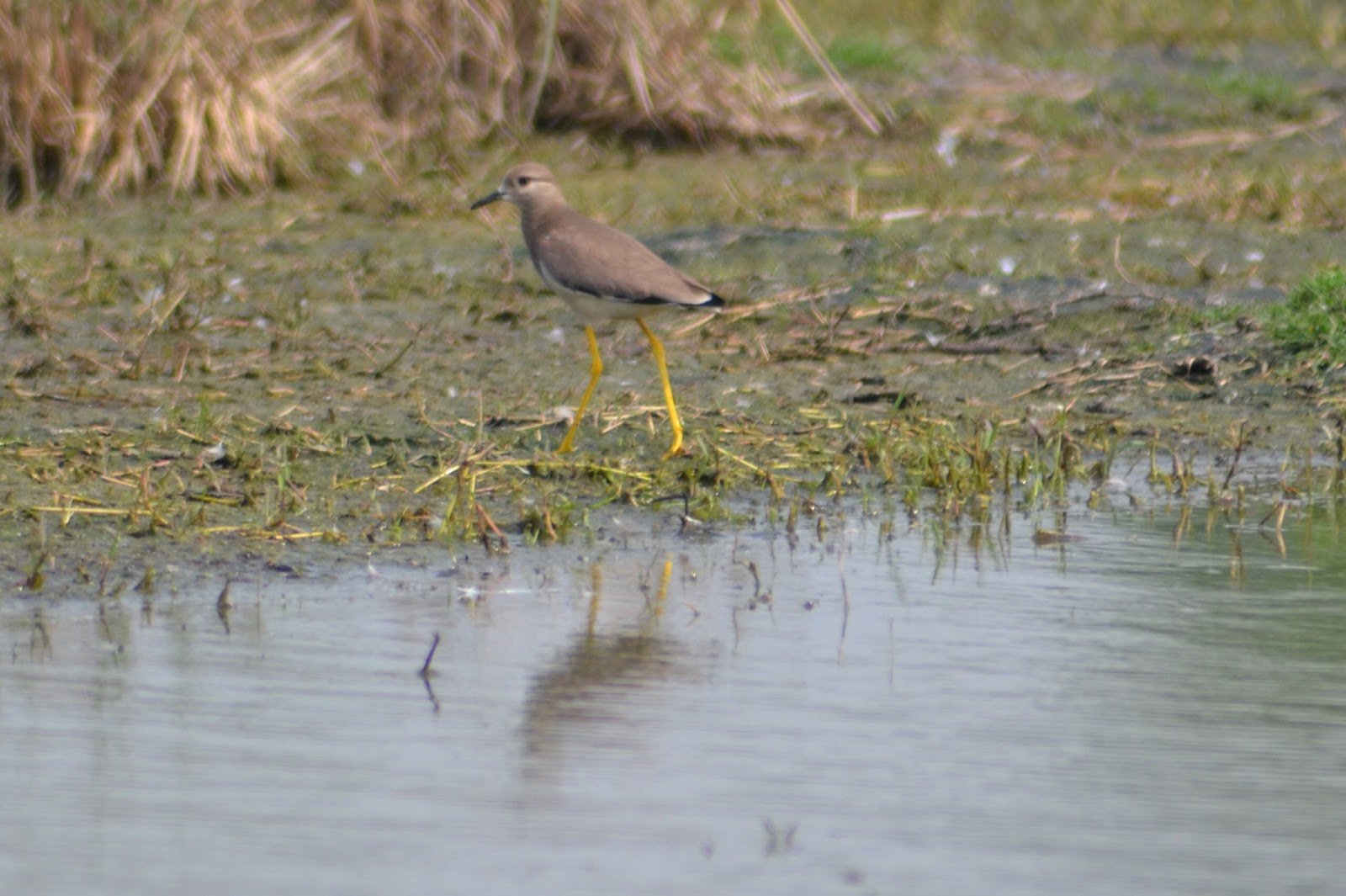
 I have so far written about Red-wattled and Yellow wattled Lapwing –Vanellus plovers, both are quite common though found in different terrain one preferring water bodies while the other dry shrubby. White-tailed Lapwing (Vanellus leucurus) is a migrant that breeds in Baluchistan to further north into Russia. This bird winters in the vicinities of water bodies in North West part of India. This one was spotted in Sultanpur Bird sanctuary in Haryana. Get down at FICCI Chowk Metro station, proceed to bus adda and catch a bus/shared auto towards Farruqnagar, it’s on the way. During winter it’s teeming with migrants, and is a great place to spend the day. So here I was, on a sunny crispy morning, there is a prime spot that not many are aware. As you enter take the right turn, though it’s against the sun so may not be good for photographing. Walk further and the terrain turns bleak, shrubby, walk still and cut into left, a narrow path through acacias and you have a marvelous view of the lake, what’s more a lone tree provides a vantage cover. After few hours of training my binoculars, trying to identify and locate (omg where is the elusive Baikal teal…hard luck boy!!), few hours and I was flipping through a book of poetry I was carrying. It’s about that time that this dainty little bird landed few meters from me. Within moments it was searching for grub in all likely and unlikely places, turning mud, scrutinizing the fallen leaves and so on. What a fragile looking busy bird. Surreptitiously, I took out my camera (very appropriately placed for 70-300mm lens) and was busy clicking. Just about that time a solid ant found it an opportune time to give me a solid bite!! So here I was feverously defending my butt, startling the bird and alerting all the birds in the region, one more click and the bird was gone, a wave of birds flew away from me, ending my brief rendezvous with White-tailed Lapwing.

The enchanting world of Qawwali

The first reference of Qawwali to me was school day festivals in north India where Qawwali was obligatory presence, later I saw these in popular Hindi movies. Though last few days I realize that many popular references may have trivialized Qawwali (Hindi movie Director Vishal Bhardwaj owes an apology to Qawwal community. He should be ashamed of himself) and worst may have ghettoized it in popular imagination of people. Nevertheless it does have exhilarating presence in our culture.      

 Qawwali epitomizes what is described as milijuli tehzeeb or sanskriti –an expression of syncretic culture, as a means which brought people together irrespective of religion or traditions or even class. It is a unique musical fusion and over the period blended into local styles. Qawwali is so energetic that it is molten force in motion. It is as if the poem has leaped out into another poem another space. Qawwali in its egalitarian self is aligning powerful with powerless. In its spiritual self it places love above god, it’s all pervading. It is said that one who dies during a qawwali his soul has travelled to other places, leaving the shell of his body behind.

Qawwali as a form of music has its roots in Arab and predates Islam but in its present form is very much Indian subcontinent in its origin. Qawwali has references in style of singing of Qawwals, Qaul (Arabic) is an "utterance (of the prophet)" and Qawwal is someone who often repeats/sings a Qaul. The Qawwal or traditional performer sang Sufi music in shrines and took devotees into trance only through their voice. The accompaniment is always bare minimum, a quintessential harmonium and clapping of hand, then ofcourse tabla. It slowly builds up to trance inducing heights offering unique spiritual experience, the ideal goal being that of mixing as one with the divine.  One essential aspect of Qawwali which differentiates it from any other form of music is that the singer is aware of the audience and therefore constantly gauges and responds, he will repeat, innovate, stress on those part that seems to evoke intense response.  It is the strand that builds the electrifying energy, a live wire to and fro that is unique with amazing space for originality.  The crests and troughs of energy flowing in a language that is simple and easy to associate, in a setting approachable, among the crowd, makes Qawwali a very compelling social and intensely personal experience.   
        
I came across these lines from one of the websites “The qawwal often dwell on one phrase or sentence, indicating both the obvious and hidden content by emphasizing and repeating various words and syllables, taking the audience into the discovery of hitherto not obvious meanings. A spinning wheel thus changes from a household instrument into the wheel of life or the wheel of hope depending on the shift of emphasis in one sentence. Repeating a sentence until all meaning is exhausted and it becomes meaningless. Through this technique, semantic reality is negated and a purity of form is created. It is often this element that transcends linguistic barriers”.


Qawwali is part of Sufi mysticism and is believed that Amir Khusrau (1253-1325) brought innovation in its form and content, very much influenced by Persian ritual sama –mystical musical gathering. The word Sama is still used in Central Asia and Turkey to refer to forms very close to Qawwali, and in Indian subcontinent the formal name used for a session of Qawwali is Mehfil-e-Sama. The great Amir Khusrau was instrumental in popularizing, improvising and bringing uniqueness into Qawwali.  It was on account of this contribution that Hazrat Nizamuddin Auliya gave him the title of Mufta ul Sama. There is evidence that qawwali predates Amir Khusrau, the great Sufi Masters of the Chishtiya and Suhrawardia Orders were admirers of the qawwali and the Saint Hazrat Outubuddin Bakhtiar Kaki is said to have died in 1236 while in a musical trance induced by a Qawwali. Nevertheless it cannot be denied that Khusrau’s contribution was nothing short of seminal, indeed he used local language sometime even seamlessly combining different languages like for instance this one I came across: Zihal miskeen makun taghaful, Duraye naina banaye batiyan where each couplet has the first misra in Persian and the second in Brij Basha which so effortlessly flow into each other. Prolific Khusrau composed many such verses in both Persian and the local dialect of Brij Bhasha. By doing so, he laid the nucleus of Urdu poetry. One can say Amir Khusrau was the founder of Urdu language. In her book “The Book of Nizamuddin Auliya”, author Mehru Jaffer writes: “… Khusrau published his first volume of poems before he turned twenty. He wrote panegyrics on seven successive kings of Delhi, introducing a new genre in poetry, that of the historical epic. Khusrau also introduced a novel strain into the existing Persian tradition of poetic forms of the masnavi by recounting certain events of his own time in long poems. His style of lyrical poetry and ghazals contains many elements that in the sixteenth and seventeenth centuries were to become characteristic of the Indian style...” Khusrau’s contribution to cultural framework of northern part of Indian subcontinent was quite significant, indeed in many ways it’s foundational.  The more you know more amazing it gets, I am shocked that he only has a passing reference in school syllabus!

Qawwali had a mesmeric pull over the masses, in the bhakti tradition of 11th century that was prevalent in north India it was easily accepted. Qawwali is ecstatic in nature, it is spiritual as well earthy therefore enjoyable. It is exotic yet relatable and inclusive. Sufi music lends itself not only to a religious interpretation but it is a cultural interpretation as well. In many sense Qawwali follows a tradition of Takhrar loosely argumentation (“it is the opening of an argument. This is not just the opening of an argument in surrender but through surrender there is a re-discovery of the self. So there is a re-positioning of the self as well which is happening. You lose the self at one level and at another level you recover a different self altogether” Madan Gopal Singh).

This brief write-up on Qawwali will not be complete without mention of great Nusrat Fateh Ali khan, the legendary Pakistani Qawwali singer who brought fame and notice to Qawwali as an art form.  There are many unsung heroes too who carry the legacy and tradition of Qawwali, trying their best to preserve and conserve this increasingly neglected art. 
 
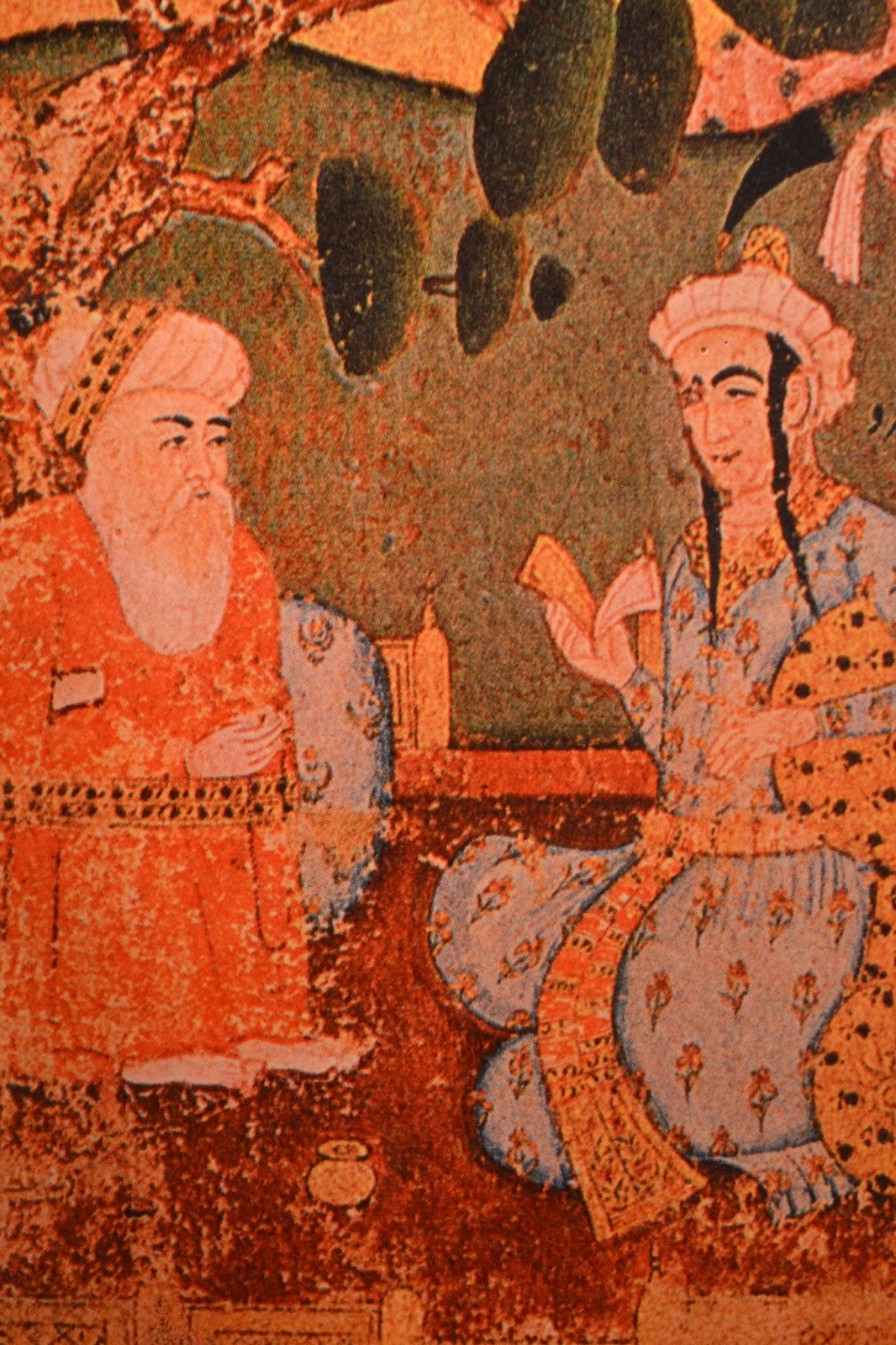
(The picture herein was taken at Understanding Qawwali, a one day symposium. The Qawwals are nephews of Nusrat Fateh Ali. The other picture is of weekly Qawwali at the Dargah of Sufi saint Hazrat Nizammuddin Auliya’s that is performed every Thursday, quite appropriately between the tomb of Auliya and Khusrau. The painting of Auliya and Khusrau was taken from Jashne-e-Khusrau exhibition at National Archives). 

From my scribble pad

A horse is a wonderful animal
It tips and tops on its toes   
One step here, one step there
A graceful bow and still for applause
All in all a dancer in repose
A singer in silence         


Thursday, February 21, 2013

The Brown-headed Barbet of Sunder Nursery, Delhi


 About a decade back Sunder Nursery next to the Humayun tomb near Nizamuddin Dargah was a nondescript place. Ideal for birding, acres of land right in the bustling city was probably the best kept secret.  Now though there is frantic ‘beautification’ going on. Keeping building and surrounding in clean and aesthetic condition probably is needed but unkempt gardens and spaces always has its charm and surprises. I am for loosing oneself in wild gardens! Sunder Nursery is now closed for ‘renovation’, I managed to sneak in, and spend about half a day of undisturbed birding. Cheers to that!  Having spent last few years in and near Western Ghats, I was constantly listening to White-cheeked Barbet (Megalaima viridis). My last sighting of Brown-headed Barbet (Megalaima zeylanica) was at Chinar bird survey, this one I think is louder, or is it the Delhi affect! What really was surprising was this bird wasn’t really troubled by my presence.  Though I was dressed in my surreptitious best and covert in movement, I was sure the bird was aware of my clumsy attempts. It chose to play ball. It came quite near me to peak into the hole in the tree, after few seconds looked into my camera and said cheese. How crazy can it get? This was my closest ever Barbet encounter.

Brown-headed Barbet is one of the commonest birds in and around Delhi that is rarely seen but heard very often. Kutr kutr kutr …it goes

Akiko Yosano (1878-1942)

A bird comes
delicately as a little girl
to bathe
in the shade of my tree
in an autumn puddle.

Akiko Yosano is a name I haven’t heard about until few days back when I saw the invitation from Japan Foundation for half a day talk by Maiku Matsudaira.  A prominent Japanese poet in the beginning of 20th century, she was controversial for her open views on freedom, love and feminine assertion in a society predominantly conservative. She also wrote extensively on needs for female education, a prolific poet, also a social reformer active in the late Meiji period. Her commentaries tended to criticize Japan's growing militarism, and promoted feminist viewpoints. In the meanwhile she also wrote stories for children the focus being on nature. Her poems were mostly in Tangka form (a much older and longer than Haiku). She is also known for her translation of Japanese classics into modern Japanese, a feat that was considered extremely difficult. Akiko Yosano’s real name was Sho Ho and she came from a family of sweet makers.   
 
Some of her poems…(a point of order, since this blog is meant for all age group, I am avoiding poems that are overtly sexual in nature. Also this blog is biased towards Nature)

River of Stars

Left on the beach
Full of water
A worn out boat
Reflects the white sky --
Of early autumn.

Swifter than hail
Lighter than a feather,
A vague sorrow
Crossed my mind.

Feeling you nearby,
how could I not come
to walk beneath
this evening moon rising
over flowering fields.

It was only
the thin thread of a cloud,
almost transparent,
leading me along the way
like an ancient sacred song.

I say his poem,
propped against this frozen wall,
in the late evening,
as bitter autumn rain
continues to fall.
What I count on
is a white birch
that stands
where no human language
is ever heard.

A bird comes
delicately as a little girl
to bathe
in the shade of my tree
in an autumn puddle.

Even at nineteen,
I had come to realize
that violets fade,
spring waters soon run dry,
 
this life too is transient

He stood by the door,
calling through the evening
the name of my
sister who died last year
and how I pitied him!

O My Brother, You Must Not Die

And dying in the way of wild beasts,
Calling such death the path to glory?
If His Grace possess noble heart
What must be the thoughts that linger there?


In contrast to Indian subcontinent where month of May is atrocious, in japan it is quite different.. 

In Praise Of May

Some tanka from “Disheveled Hair
Droplets fall from a young girl’s hair
Congealing on grass
Giving birth to a butterfly
In the country 
Of spring

My skin is so soft
Fresh from my bath
It pains me to see it touched
Covered by the fabric
Of an everyday world

How beautiful they are
The people brushing past me
As I stroll through Gion
To the Temple of Kiyomizu
On this cherry blossom moonlit night!

Scribble from my note pad…

The city ignites every night
Sometimes on its own
It isn’t the same
It doesn’t feel the same
This surely should have subtitles 
People prowl the street
Bartering sights and sensation
Occasional deals of desire
Add on benefits
It depletes every thought