Thursday, May 24, 2012

Waking up to the call of Malabar Whistling Thrush


There is a whistle that echoes through the morning mist of Western Ghats. Wafting the ravine forest and churning mountains it resonates in unmistakable gaiety. The resplendent rising sun is hummed to a bright new day. It’s the Malabar Whistling Thrush adding its oral aesthetes to the verdant visual. Whistling schoolboy is an alias that adds to its nonchalant splendor, the boyhood of yore. The lines from James Whitcomb Riley’s poem ‘To a Boy Whistling’ was never so apt    
          
O happy boy with untaught grace!
    What is there in the world to give
    That can buy one hour of the life you live
Or the trivial cause of your smiling face!

Malabar Whistling Thrush aka Myophonus horsfieldii are endemic to Western Ghats. It carries its shiny patches of blue on the forehead and shoulders with aplomb.    

James Whitcomb Riley: We are not always glad when we smile!!

James Whitcomb Riley (October 7, 1849 – July 22, 1916) was an American poet and writer, who after a squalor origin gained immense popularity in US that he elevated to the status of national poet. The book titled the Rhymes of Childhood was his most popular work. I am putting some of his poems here that I found interesting, of course many more can be read in the Net.  

Plain sermons

I saw a man—and envied him beside—
    Because of this world's goods he had great store;
But even as I envied him, he died,
    And left me envious of him no more.

I saw another man—and envied still—
    Because he was content with frugal lot;
But as I envied him, the rich man's will
    Bequeathed him all, and envy I forgot.
Yet still another man I saw, and he
    I envied for a calm and tranquil mind
That nothing fretted in the least degree—
    Until, alas! I found that he was blind.
What vanity is envy! for I find
    I have been rich in dross of thought, and poor
In that I was a fool, and lastly blind
    For never having seen myself before!

If I knew what poets know

If I knew what poets know,
    Would I write a rhyme
Of the buds that never blow
    In the summer-time?
Would I sing of golden seeds
Springing up in ironweeds?
And of rain-drops turned to snow,
If I knew what poets know?
Did I know what poets do,
    Would I sing a song
Sadder than the pigeon's coo
    When the days are long?
Where I found a heart in pain,
I would make it glad again;
And the false should be the true,
Did I know what poets do.
If I knew what poets know,
    I would find a theme
Sweeter than the placid flow
    Of the fairest dream:
I would sing of love that lives
On the errors it forgives;
And the world would better grow
If I knew what poets know.

Song of the New Year

I heard the bells at midnight
    Ring in the dawning year;
And above the clanging chorus
    Of the song, I seemed to hear
A choir of mystic voices
    Flinging echoes, ringing clear,
From a band of angels winging
    Through the haunted atmosphere:
        "Ring out the shame and sorrow,
            And the misery and sin,
        That the dawning of the morrow
            May in peace be ushered in."
And I thought of all the trials
    The departed years had cost,
And the blooming hopes and pleasures
    That are withered now and lost;
And with joy I drank the music
    Stealing o'er the feeling there
As the spirit song came pealing
    On the silence everywhere:
        "Ring out the shame and sorrow,
            And the misery and sin,
        That the dawning of the morrow
            May in peace be ushered in."
And I listened as a lover
    To an utterance that flows
In syllables like dewdrops
    From the red lips of a rose,
Till the anthem, fainter growing,
    Climbing higher, chiming on
Up the rounds of happy rhyming,
    Slowly vanished in the dawn:
        "Ring out the shame and sorrow,
            And the misery and sin,
        That the dawning of the morrow
            May in peace be ushered in."
Then I raised my eyes to Heaven,
    And with trembling lips I pled
For a blessing for the living
    And a pardon for the dead;
And like a ghost of music
    Slowly whispered—lowly sung—
Came the echo pure and holy
    In the happy angel tongue:
        "Ring out the shame and sorrow,
            And the misery and sin,
        And the dawn of every morrow
            Will in peace be ushered in."

To Annie

When the lids of dusk are falling
    O'er the dreamy eyes of day,
And the whippoorwills are calling,
    And the lesson laid away,—
May Mem'ry soft and tender
    As the prelude of the night,
Bend over you and render
    As tranquil a delight.

We are not always glad when we smile

We are not always glad when we smile:
    Though we wear a fair face and are gay,
        And the world we deceive
        May not ever believe
    We could laugh in a happier way.—
Yet, down in the deeps of the soul,
    Oft times, with our faces aglow,
        There's an ache and a moan
        That we know of alone,
    And as only the hopeless may know.
We are not always glad when we smile,—
    For the heart, in a tempest of pain,
        May live in the guise
        Of a smile in the eyes
    As a rainbow may live in the rain;
And the stormiest night of our woe
    May hang out a radiant star
        Whose light in the sky
        Of despair is a lie
    As black as the thunder-clouds are.
We are not always glad when we smile!—
    But the conscience is quick to record,
        All the sorrow and sin
        We are hiding within
    Is plain in the sight of the Lord:
And ever, O ever, till pride
    And evasion shall cease to defile
        The sacred recess
        Of the soul, we confess
    We are not always glad when we smile.

From my scribble pad… 

Sun after the rain
It’s like a faint touch of soul departed
revealed in a prospect.
An apparition hanging within the indolent cloud
the glint on each leaf magnifying the vividness of it.
All my life capsulated in this instance
in this lone moment
when death matters the least       


Friday, April 27, 2012

Scandal in the woods


As the day breaks in the east there is a wail, horrendous screeches, whistling reprisals followed by conciliatory gurgles. The congregation of insinuative loud shrill is now back on the canopy of the tallest tree.  There is a scandal in the hills. As proletarian they get any Hill Mynas worth its salt will use its oral felicity to thrash out the issue. Their egalitarian worldview extends to include miming a hapless human going about his or her daily chore. The repertoire is impressive by any bird standard. I can believe anything provided it is incredible, said Oscar Wilde. So we believe !!

Overall green-glossed black plumage, white wing patches, obvious in flight but mostly covered when the bird is sitting. The bill and legs are bright yellow; there are prominent yellow wattles on the nape and under the eye. Hill Mynas aka Gracula religiosa is a member of the starling family. The one above is Southern Hill Myna (Gracula indica) that is found only in Western Ghats and southern Sri Lanka.

Gladys May Casely Hayford: poet of Harlem Renaissance movement

Gladys May Casely Hayford (1904-1950) alias Aquah LaLuah, her African name, was born in Ghana (previously Gold Coast), she was a writer, poet, musician, dramatist, painter and story-teller. Gladys was an influential poet during the Harlem Renaissance. She died of blackwater fever. 


My Africa 

Oh land of tropic splendour, engirded by
    the seas,
Whose forest-crested mountains lift heads
    unto the breeze;
May patriotism render its praise on sea
    and shore,
Till Africa, great Africa becomes renowned
    once more,
May God walk on her mountains and in her
    plains be peace,
May laughter fill her valleys and may her
    sons increase:
Restored be strength and beauty and visions
    of the past;
Till Africa comes once again into her own
    at last.
Destroy race prejudices, break down the
    bars of old.
Let each man deem his brother of far more
    wealth than gold,
Till tribes be merged together to form one
    perfect whole,
With Africa its beating pulse and Africa
    its soul.
O Lord as we pass onward, through evolution
    rise,
May we retain clear vision, that truth may
    light our eyes,
That joy and peace and laughter be ours
    instead of tears,
Till Africa gains strength and calm,
    progressing through the years.

The Serving Girl
The calabash wherein she served my food
was polished and smooth as sandalwood.
Fish, white as the foam of the sea,
Peppered and golden-fried for me.
She brought me palm wine that carelessly slips
from the sleeping palm tree’s honeyed lips.
But who can guess, or even surmise
the countless things she served with her eyes?

The Cart-Horse
When blue becomes intense and dusks to grey,
Grey unto darkness shrouding the worn day,
I like to lie awake and gaze upon the
    cloudless sky
And hear the song of the cart-wheels as the
old cart-horse goes by.
The squeaking boards,
The rusty chains,
The clank of steel and brass,
The intermittent hoof-beats as the old
    cart-horse goes past.
When darkness turns to grey again and grey
    to light,
When little wrens awake prepared for flight,
I like to lie awake with the warm sun
    streaming in,
And try to understand the tune the good old
    cart-wheels sing.
The squeaking boards,
The rusty chains,
The clank of steel and brass;
Oh, I love to hear the music of the cart-
    horse going past!

Dawn
Dawn for the rich, the artistic and the
    wise,
Is beauty splashed on canvas of the skies,
The brushes being the clouds that float
    the blue,
Dipped in the breeze for paint, and washed
    by dew.
But dawn to those who bathe the night in
    tears,
Squeeze sustenance from hard unyielding
    years,
Is full of strange imaginings and fears.
The dawn renews the terror of the day
Where harassing uncertainties hold sway;
And pain held in surcease through brief
    hours of rest
Roars up its head in its unceasing quest
To wear out body, brain and mind and soul
Till death is a resolve, and death a goal.
For those life holds no beauty, dawn no
    light,
For day is hopeless, dawn is struck with
    blight.

The Ant 
 I met the daintiest little ant,
Her waist was slim and narrow --
    "I wonder if you've bones?" I asked,
    "And are they filled with marrow?
    Where are they situated,
    Is what I'd like to know?
    And are they lubricated
    Like people's bones or no?
    Surely you must have a skull,
    Protection for your brains,
    To know the rate and the exchange
    Of market goods and gains?"
But by the time I'd finished
My wonderful oration,
My dainty ant, distinctly bored,
Had changed her situation.

The Lizard
I met a handsome lizard upon the gravel walk,
And so I stopped politely and asked him for
    a talk;
He nodded once, he nodded twice to make his
    meaning plain,
Glanced up at me with wee bright eyes and
    nodded once again.
I said, "You live on flies. Do you eat them
    alive or dead?
And when you eat them, do they still keep
    buzzing in your head?"
He shrugged, then very haughtily inclined to
    me his ear
Insinuating it was time I made my meaning
    clear.
"I'm sorry," I began, "but please, this
    question if I may;
Do you, Sir, shake your head for no and nod
    your head for aye?"
He glanced at me with cold disdain, ignoring
    me, until
He slowly and deliberately climbed on the
    windowsill
He turned, he nodded once, twice, thrice to
    make his meaning plain,
Glanced up at me, with wee bright eyes and
    nodded once again.

The Leaf
"I am still alive, I cling to my parent
    branch,"
A young leaf was crying.
    "I am still
                Flying,
                        Flying,
                                FLYING."
But the night wind caught her and held her
    soft sighing;
He had chilled her heart.
She was
                Dying,
                            Dying,
                                        Dying.


Harlem Renaissance was a cultural movement that spanned the 1920s and 1930s. It was also known as the "New Negro Movement” and though it was centered in the Harlem neighborhood of New York City, many black writers from African and Caribbean colonies were also influenced by the Harlem Renaissance. 
The Renaissance was more than a literary or artistic movement; it possessed a certain sociological development -particularly a new racial consciousness- through racial integration. The Harlem Renaissance helped lay the foundation for the post-World War II phase of the Black Civil Rights Movement. 


From my scribble pad…

Dear butterfly that flits on my lap
The brazen butterfly beautiful
carries all the burden in its light colours
to attract, evade, dalliance with
and caress fickle life
in all its nuanced fullness.
Still to remain the same
in the face of everyday gnawing death   


Wednesday, April 25, 2012

White browed prowl

There is a Zen saying “If you understand, things are just as they are; if you do not understand, things are just as they are”. So is the case with Kerala Laughing Thrush alias Grey Breasted Laughing Thrush. The laugh you may say is ominous, so you may say.  The fipple flute is an accompaniment of allegro, so you may speculate. This white browed bandit unmindful of appraisals forages the undergrowth for wild raspberries, with a nimbleness of a connoisseur, testing for correct ripeness -for its rather evolved palate. Occasionally hopping out into the opening, from the ruckus assemblage of high antioxidant feast.  Unmindful of the garrulous queries of Red-whiskered Bulbuls the culprit has moved on and vanished into nearby shrubs leaving some striking memories of a bird that is found only in this part of the world.

Kerala Laughing Thrush aka Garrulux Fairbanki is an endemic species. Dwindling habitat has seen to that it has become Near Threatened (IUCN). That truly makes it a rare sight.

Hill Pulayas of Marayoor 

Marayoor is known for its sandalwood forests and dolmens, what is less known is the significant population of Hill Pulayas in the region. I met Murugan the moopr (headman) of the settlement (of Karavazhi Pulaya). The Hill Pulayas are also referred to as Malapulayas. The origin and history of Hill Pulayas is ambiguous. There are no legends which explain their origin. They seem to have migrated from Madura and settled in the forests of Devikulam taluk. Hill Pulayas have suffered worst discriminations over the period of time. Murugan explained till about few decades back they weren’t even allowed to enter restaurants and were given tea in coconut shell. With communist wave sweeping Kerala, Hill Pulayas aligned with the comrades. Murugan relates how for the first time in his life he entered the restaurant in 1958; incidentally eleven years after India famously got its ‘independence’. (Whose independence was it anyway?). There were few comrades with Murugan as he entered the hotel but he was singled out by the owner and was asked to leave. The comrades made it clear they will destroy the shop if he tries any stunt (nothing Gandhian about it!!). The sissy shop owner agreed immediately. “I couldn’t believe my eyes that I was sitting on the bench sipping tea from kuppi glass” he was visibly elated as he related these. The camaraderie with comrades lasted for few decades but the tribes soon realized that comrades were taking them for a ride and in actual sense sucking on them. ‘Pattaya’ is an official document that gives authenticity to the landowner, the intricacies of which tribes were not aware of. They were made to clear land, while someone else got the document. Things came to crossroad with comrades trying the same trick. Murugan went to the MLA, who pretended ignorance, all the while actively conniving. It was then that they broke their association with communists. Quite ironically, much later in 2002, it was Congress that gave them ‘pattaya’. Murugan says “despite cheated by comrades we still are with them, atleast in our mind. We are indebted to them”. Indeed early period of communism in Kerala had paved way to substantial breaking of social barriers and awareness of individual rights. Though one need add communism as it exists in contemporary context in India is quite a sham, as much as capitalism is. It runs on opportunism and nepotism, broadly called ‘networking’. Monetary corruption is only secondary. Murugan is an old man now; he says he has enough experience to fill up all books in libraries. One need add here that the community is still one of the poorest sections of the society, and the settlement (kudi) is as much a slum. He lives in a partially constructed house. 

I was introduced to Vellachi. She is about 80years, and been ill for some time. I was told that these songs are now not known to many people. This song is sung by Hill Pulaya women while cutting grass and collecting wood in the forest. It serves the purpose of keeping them occupied as also ward off wild animals. The song is about relating their sadness to a stranger girl who is passing by the way. Please visit http://www.youtube.com/watch?v=tT1ZGqteTms&feature=youtu.befor the video.
                      
The Hill Pulaya has their endogamous groups like Kummba Pulaya, Karavazhi Pulaya and Pampa Pulaya. Kurumba Pulayas are called by this name as their early occupation was sheep rearing and they were engaged in tending a particular variety of sheep known as 'Kummba' sheep. Karavazhi originated from their agricultural occupation of 'Kara' (land). It is also possible that the name is derived from the combination of the words 'vazhi' (route) and 'Kara' (land) which shows that they came by land route. I was told that Kurumba Pulaya’s don’t eat meat of domestic animals, this after a dispute with Karavazhi Pulaya. 

The Hill Pulayas consider themselves to be Hindus and worship many of deities of Hindu pantheon. The deities worshipped by both Karavazhi Pulayas and Kurumba Pulaya are Kali, Mariyamma and Chaplamma. Besides the Hindu Gods and Goddesses usually worshiped, they also worship forest deities such as Karappaswamy and Kannimari who are supposed to protect them from all evils. In a temple called Arunakshi Amman koil situated near Marayoor, offerings are performed by Karavazhi Pulayas during festive occasions. The temple where Chaplamma is worshiped is located near Chinnar river and is most important temple of Kurumba Pulayas.
 
The Dolmens of Marayoor

Just about 5Km from the Marayoor junction is a rocky mountain; the vicinity and surrounding are the setting for the prehistoric structures called dolmens (Muniyara in Malayalam). Dolmen means ‘stone table’, and there are large numbers of these located in this region.  Unfortunately the megalith at the mountains, where most tourists visit, is vandalised. Broken liquor bottles and used plastic glasses filled the place. It was a sad sight, it’s unfortunate that most tourist place has this problem. The least that is expected from authorities is to keep the sight clean.
   Huge boulders of rocks were arranged in little huts like the one children make. Rough cutting of stones, i read, indicates these are before the Iron Age as no tools were used. These were the burial ground of noble families of the time, later these were used by tribes and so on.      


from my scribble pad...

Artist in the dawn  
Hues of delight in the dwindling dark  
floats and merge at artist’s quirk.
Beyond the mortal sight
a caring hand does all the trick.
Unmindful of the witness
tiring in the morning haste.
  

Saturday, March 31, 2012

Bees are on the menu for Chestnut Bee eaters

I get to see Chestnut Bee eaters on a daily basis, and what a sight these birds are. It’s quite a spectacle to see a slosh of colors acrobat the sky, catch flies.  Hymenoptera (ants, bees and wasps) comprise their diet, with a marked bias towards honey bees. Little green Bee eaters (covered in earlier blog) are common across the country while Chestnut’s are confined to southern hills of Western Ghats to north eastern hills, and towards to south east Asia.   

Soligas: The Children of the Bamboo

The Soliga tribe are known to have immense knowledge about forest and traditional insight on conservation. I was reading that “……a study performed in 2008 looked at the Soliga claim that forest fires are in-fact beneficial for biodiversity. Generally, forest fires would be extinguished by the forest department using modern fire-suppression regimes. However, the Soligas claimed that natural fires are inherent part of the forest biome and extinguishing such fires leads to increased parasitic load. The above study looked at infections of Loranthus - a plant parasite - on Phyllanthus emblica (Amla) trees and found that fire indeed reduced the parasitic load on these trees and increased their survival. This example points to the importance of considering local, folk knowledge in any biodiversity conservation regime”. Must say it is quite interesting, I am reminded of Yellowstone Park fire (in USA) about two decades back, and how forest fire came to be looked from entirely new point of view.  

Soliga means ‘children of bamboo’ as they believe that their ancestors originated from bamboo. They   are nomadic people who live off forest produce like honey, berries and timber. They live in small shelters called pudus deep inside the dense forests of Western Ghats. Soligas worship Champaka tree (Michelia champaca), the magnificent tree called Dodda Sampige in local language. There are settlements in BR Hills and MM Hills wherein they are exposed to modern influences.  In 1979, Dr. H Sudarshan, a young idealist doctor, came to BR Hills to work with the Soliga tribes, and since then is helping the Soligas negotiate the influences and as also fighting for their rights and cause. I did meet him during the public discussion on Forest bill in 2006 in Bangalore.  The Soliga lifestyle of shifting cultivation, foraging and hunting harmoniously in tune with cycles of the forest till the forest rules came into effect and all economic activity including collecting firewood became illegal. Soligas faced immense hardship.   

Organizations like ATREE, the Vivekananda Girijana Kalyana Kendra (VGKK) by Dr Sudarshan, the Soliga Abhivrudhi Sangha and the Karnataka Forest Department have played a significant role in livelihood enhancement of the Soligas and in rendering their help in biodiversity conservation in the Western Ghats. Soliga knowledge of the forests and their affinity with nature is sought to be conserved. I recently had the good fortune to visit a Soliga settlement in MM Hills. MM Hills is sad story of Lantana invasion, it has completely overwhelmed the forest. It’s quite a terrifying sight. Soligas who have a traditional expertise in bamboo related work are being trained to use lantana wood as substitute. I was gifted a keychain (I insisted on paying, and did make them take the money) made from lantana. Though it was exquisite piece of work but I was informed that wood quality is inferior to Wrightia tinctoria (Aale mara or ivory wood) -one used for famous Channapatna toys. Despite these it need be mentioned that the effort to find economical value to lantana has been a significant success and lantana wood do find its use in construction of chairs and beds. 

I went to Gorsana, a rather emaciated looking hamlet. Dhoduthusidha is the headman, he promptly said he has no much knowledge about songs but yes his wife sings Soligas songs during marriage ceremonies. His wife and few ladies with children were seen crowded around bangle seller, trying out colorful wares.    Dhoduthusidha called out for her, she showed extreme irritation as she answered still working her way through the bangles. Dhoduthusidha seemed to have got the cue “I don’t think she remembers those songs now” he said. He gave reference of an elderly woman in the neighborhood, who sings on all special occasions and is indeed repository of oral tradition. He said he had seen her singing ever since he could recall.  

Puttamma was bathing when we reached her hut she told us to wait. Outside a middle aged man was chiseling the wood.  Giriappa was creating sculpt of Nandi bull which he said he will donate to the temple. He was quite focused in his work and seemed to enjoy it. I could very well see the passion and the reason why they called themselves “children of bamboo”. The connection to nature was rather strong. A piece of wood in Giriappa’s hand was metamorphosing into a craft, unique in its sensibility. Puttamma was ready, and looked quite excited. Her excitement was compounded when she was asked to sing traditional song. She seemed keen, and promptly sang a marriage song. Sonnaamma who was sitting nearby couldn’t resist the temptation of joining. Next song (the video herein) was sung during powdering of ragi seeds “we don’t do it any more” she said “there isn’t any ragi to pound”. The song was based on interesting theme. It was imploring god who had gone away into the hills to come back. Now why did the god go away, I asked, very much curious. Well…he found the crowd in the temple too overbearing!! O how much I love these. There is so much fun here. Enjoy the video (http://www.youtube.com/watch?v=KoVusc9fqNI&context=C4b2aa09ADvjVQa1PpcFPJgAcgwUqv2VnI5C5-Qp-DapLneOOmgK8=) and the unique people called the Soligas… 

The threat of lantana: Lantana, Lantana camara to be specific, is one of the vicious plants around. It’s considered ten most invasive species in the world. The threat is real. What makes it worse is that these plant’s leaves are mildly toxic for animals while the flowers are preferred by butterflies and bees, and the berries are relished by birds. They bloom in abundance thus decimating the local species. I happen to attend a seminar sometime back wherein they showed the satellite pictures of lantana spread over the decades. It really is scary.   
      
Channapatna the toy town: I happen to be at Channapatna, the town known for toys made of wood. Toys from here have international market. They are even protected with Geographical Indicator tag. It was Tipu Sultan who got the artisans from Persia that set up this art form. The wood commonly used is Wrightia tinctoria tree, colloquially called Aale mara (ivory-wood) and lacquering it (lacquer comes from Sanskrit word laksha meaning "one hundred thousand). These toys are environment and child friendly.


from my scribble pad...
 
To negotiate
The myth sown in yesteryear’s slack noon
in the temple ground
has fermented
into conscience, bitter sweet froth
to negotiate sharp turns and dents  

Lightening in the rain
Do we recall the names
so easily settled on our lips
summoned and discarded.
Filial concerns on a stormy night  
cracks into flashes.
Comprehend the stillness
that envelops and keeps on. 

Friday, March 9, 2012

Arctic skua: To spot a transequatorial kleptoparasitic migrant

Earlier this month on a bright Sunday morning this blogger had the good fortune to be part of a full day Pelagic Bird Survey organized by Cochin Natural History Society and KeralaBirder. We were a motley group of twenty odd people, after exchanging mandatory pleasantries and short inaugural speeches we were cruising along the historical coast of Arabian Sea. By noon we had ventured about 20 nautical miles. It was probably first of its kind experience for many in the group, sighting some of these never seen before pelagic birds added to the excitement (unfortunately for me I had taken anti vomiting tablet that left me drowsy, and quite disoriented…but to my credit I did stay awake and took some credible pictures). Taking pictures on wobbling boat of never-will-be-still birds was quite challenging, adding to the fact that I was carrying 70-300 manual lens!!
Back in the comfort of my shack I studied the pictures and to my surprise found Arctic skua (the lower pic i am not able to confirm clearly). Though a common bird, Arctic Skua is a rare sighting in this part of the world. A transequatorial migrant that breeds in the north of Eurasia and North America, and winters in south America through Africa and the coasts of Australia and new Zealand.  Also called Parasitic Jaeger, Arctic skua has a well-earned reputation as avian pirates, stealing much of their food from other birds. "Kleptoparasitism" is the term used for stealing food from other species, while "jaeger" is derived from the German "hunter." These are aggressive agile birds that attack in midair forcing their victims to drop their kills in flight, they are relentless in their pursuit sometimes even working as a team. Arctic skuas are true pelagic birds and live most of their lives at sea, and come ashore only to breed in the Arctic summer.
       
Palleyan tribes of Periyar wildlife sanctuary

Palleyan are the tribes that used to inhibit the deep forest that is now classified as Periyar wildlife sanctuary. They are honey hunters who also indulged in shifting cultivation. They speak a language that is almost Tamil. The story goes that during the construction of Mullaperiyar dam, in the noise and commotion that suddenly invaded their peaceful world the Palleyan saw signs of calamity befalling their clan, so they migrated en masse to deeper part while a section who came in contact with the outside world found work in the construction site (some converted to Christianity). This is the segment that settled in Kumily. As years passed, an accidental meeting in the forest of these fragmented community led to reunion. There are now about 2000 Palleyans and most are found around Kumily. I was in Kumily sometime back so visited the hamlet (kudi), quite coincidently Palleyan dance program was arranged.

I met the Kannikaran (named Mr. Aravi) who is supposed to head the clan. The Kannikaran is helped by Thalayari and Thandakaran. Aravi, a middle-aged man, also acts as the temple priest. The religious tradition seems to be very much influenced by Hinduism (even the bad references like mistreatment of widows). The main deity is Palleyankudi devi. The goddess is believed to have thousand eyes “ayiram kannu da aliu”. She also is “elaithu pallichi”-seven river goddess. The song says…

Elaithu pallichi
Elairum vilkar
Elnathi vanthu vanthar tharakame varai
Elnathi ootadathu chirumalayi varai

 (rough translation)

Seven river goddess
equivalent to seven thousand warrior
Seven river goddess forbearer of sacred hymns
Seven river goddess fountain of mountain life  
 
There is also a legend of woman who was abandoned by her brothers with a child. As the woman starved the child seem to have walked faraway (towards Tamil Nadu). The woman later converts to goddess with the child (the picture herein). Even now during festivals a Palleyan member is invited to adjacent Tamil Nadu village and treated as esteemed guest and bathed in turmeric water.   

 Aruvi happened to be the man who had partial record of vanishing oral tradition. He also uses his talent (he calls it god’s gift, I caught a shade of ego in his bearings or was it pride on his cultural inheritance?) and experience to add new lines. I took the picture of writings that is handed over orally for centuries, Aruvi has written it down. Some he sang, the one in the video here is a dirge (uploaded at http://www.youtube.com/watch?v=zXPBDReAV_c&feature=youtu.be). He did mention that after death, the connection is cut with the living these lines are quite significant.

Nee thee ayi maari
Njan palluayi maari
Innikum ninakum
Oru bandham illa   

You have become fire
I have become milk
You and I
Have no connection

This translation of the song contained in the picture herein…it’s a song about couple going to market and the husband trying his best to convince his wife against buying!!!  

The land we are going to
Esdanakankani Esdanakankani
Where the cloths are sold
Esdanakankani Esdanakankani
The land we are going to
Esdanakankani Esdanakankani
Where the anklets are sold
Esdanakankani Esdanakankani
The land we are going to
Esdanakankani Esdanakankani
lame are you what use for you
Why buy these
Let’s go let’s go

The land we are going to
Esdanakankani Esdanakankani
Head of five villages is not my father
Rich woman is not my mother
Let’s go let’s go

The land we are going to
Esdanakankani Esdanakankani
Villisundaram, Vellasundaram
Villikabbi, Sellaakaari
are all not my relatives
that youngster is not even my brother
Let’s go let’s go
Pick up your bag
let’s go from the market 
   
from my scribble pad...

Sunrise
The uncomprehending eyes
can but see the moments
that spill colours.
The mountain, the clouds, the trees
and i here
become one in the canvas
that spreads and spreads.

Blessing
A damselfly’s connection with infinite 
is difficult to hide
endowed with subtlest blessing
disclosed in hasty presences. 


Sunday, January 1, 2012

Plain Prinia: no time for small talk


Previously referred to as Indian Wren Warbler, Plain Prinia is a small bird with relatively long tail, commonly seen in cultivated land. It differs from Ashy Prinia for its brownish upperparts.    
Irulas: people who know snakes
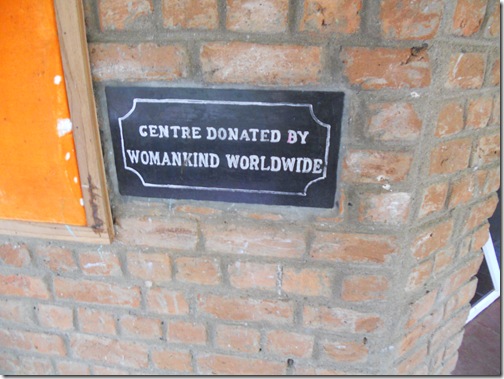
It was while i was cycling from Chennai to Puducherry -at Madras Crocodile farm, earlier this year that i thought of visiting Irula tribes. Few months later i was back in Chennai, about two hours in local train will take you to suburban town of Chengalpet, if you are lucky you will get a direct bus to Thandarai. About a Kms walk is Irula Tribal Women’s Welfare Society (ITWWS), founded by Rom and Zai Whitaker in 1986 with an aim of “protecting natural resources, empowering Irula women using the knowledge of forest resources for economic prosperity”. It is a membership based organisation initially started with five villages and now covers an area of 4 districts working with over 60 villages. The Centre is a repository of Irula knowledge, the collection and documentation of seeds is enviable. Apart from this, medicinal herbs and trees are also properly catalogued. I found the literature on Irulas wanting, and had to rely on Anthropological Society of India library in Mysore.             
Irulas are one of the most backward tribes who are facing innumerable challenges. The name Irula bear a reference to the dark jungles they live in. A legend says that goddess was interested to create people who could collect honey without being stung by bees, and she created one out of her sweat, who was successful in collecting honey without being stung. Even now it is said that bees and wild life flee at the smell of Irula’s sweat.   Another legend speaks of origin from irul mara (tree)
   Irulas are classified into various subgroups based on linguistic and social variations. These are Malenadu Irular, Kasaba, Vettakkara Irular, Urali Irular and Villiyan. The first four subgroups share similar ethnic and linguistic features but with slight variations, and are mostly found in Nilgiris and so referred to as Nilgiri Irulas.  Villiyans (villu meaning bow -a reference to hunter) are ethnically and linguistically different. They speak Tamil dialect, and are also referred to as pambukaran (snakeman). They are the one found in Chengalpetu region.
Every clan among the Irula has its own chief called naatamkar, who also doubles up as medicine man and priest. Irulas are known for their expertise in snakebite treatment. It is interesting to read that they use powdered mixture of eight types of plants for snake bite. The bark of the tree (kuruvi or kodachaali) is given to the bitten person to chew if the patient gets sweet taste then it is identified as poisonous bite while if it tastes bitter then it is non poisonous.  After ascertaining poisonous bite, further steps are taken. And yes it is recorded to have worked. By the way leafs of vottam talai (couldn’t locate the scientific name) tree are used to commit suicide. Organic suicide anyone?!!
Kanniamma is the principal deity (Mariyamma in case of Nilgiris– Thurston mentions it as being Goddess of small pox) other deities are influenced by Hindu gods. Kanniamma is represented by five pots arranged in square with a single pot in centre filled with turmeric water. Some trees too are considered sacred, as also the termite mound. The fame of Irulas may lie in snake catching skills but their primary occupation happens to be honey collection, toddy tapping (atleast that is what i read).  Irulas though non vegetarians avoid beef (i haven’t come across a mention of them eating snake, which is strange), rabbits, rats, porcupine etc are on the menu, roasted termites is a culinary delicacy.
Kannimar varniththal is a Irula fortune teller, he beats the drum and shakes while his wife sprays turmeric water over him. Soon he is possessed by Kanniamman. His wife unties his tuft of hair, he shakes rapidly and hisses like snake. He calms and addresses the crowd as if he is the goddess, saying
“Oh children! I have come down on my vehicle, which is decorated with mango flowers, margosa and jasmine. You need fear nothing so long as i exist, and you worship me. This land will be prosperous, and people will continue to be happy. My precious vehicle will be immersed in tank and will be taken out in procession after that the land will become more prosperous”.
Questions if any are put to the ‘goddess’ through his wife. If nothing they chant the praise of kannimar for hours at stretch as more and more people join in.  
I got a CD of Irula songs from the Centre, and last many months i have given to many people to get it translated into English. It has passed from one person to another without any success!! I thought of putting this blog once i get it translated, but since it’s taking too much time i thought of going ahead with the blog. The moment i get it translated will upload it.   
From my scribble pad...
Connecting
We took the heat
in the blood
to grow stories of passion,
as an afterthought on life
we created myth,
while the marrow grew steady
connecting the synapses

Chamomiles
Delicate slashes
placed appropriately in heart’s desire.
So much beauty hurts.