Monday, October 22, 2012

Scimitar Babbler: early morning boom


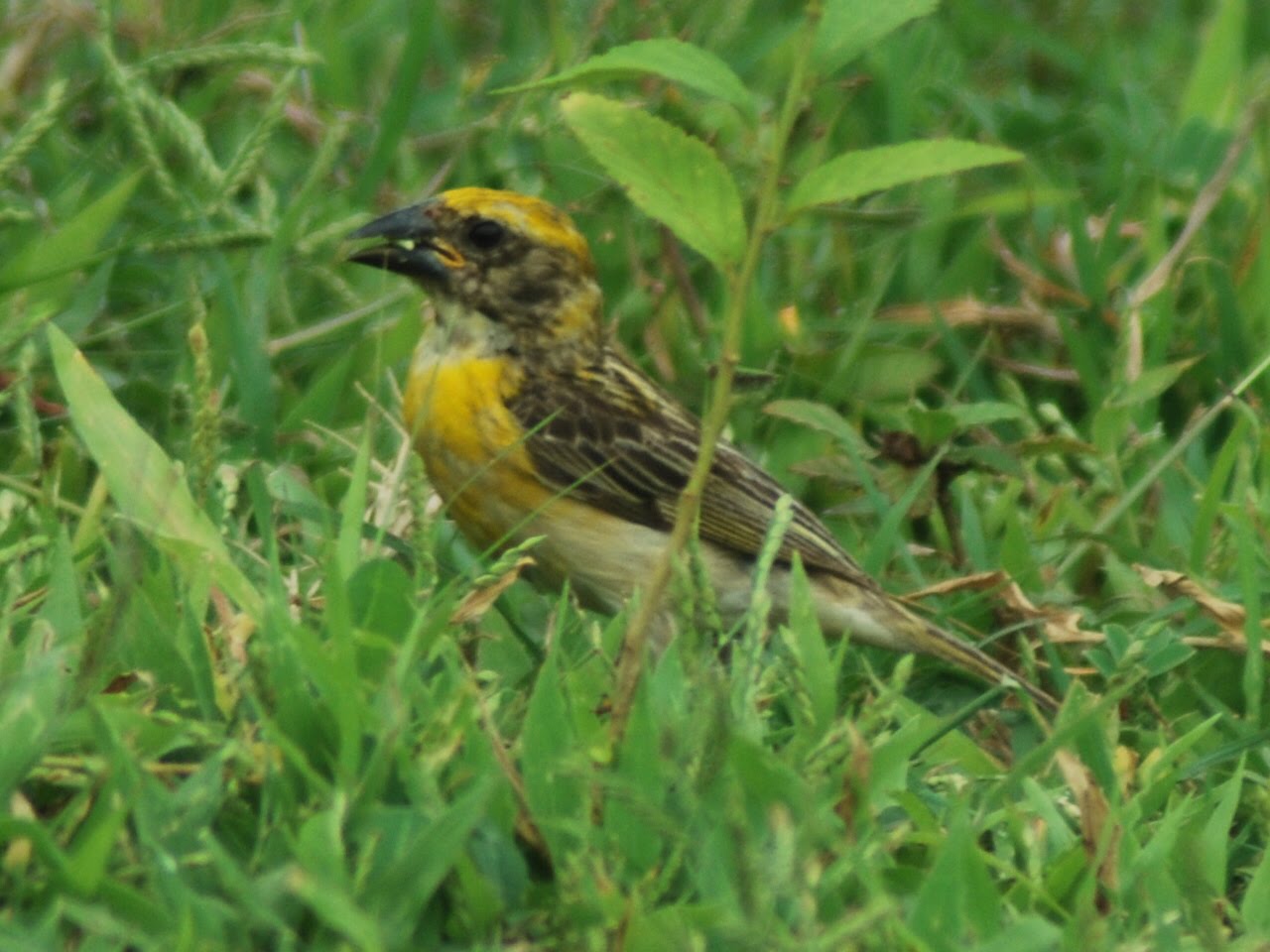
There is one bird that I hear quite often is Scimitar Babbler, its call is rather fine tuned Caucal. They have curved bills almost like a Scimitar, hence the name. It is rarely seen in the open so difficult to spot. Like all Babblers they are seen foraging the undergrowth mostly in mixed feeding flocks.   

Kaifi Azmi: the pinnacle of Urdu poetry 

Kar chale hum fida jan-o-tan sathion
ab tumhare hawale watan sathio

These lines are so much etched in the collective memory of Indians that it is difficult to think of any song that defines patriotism. Kaifi Azmi happens to be one of my favorite poets, his lines are straight from heart, and carry much subtlety and nuance. It is such an experience to read his lines…

Many years back I used to keep away two weeks for one poet, so that I took lot of time to read each and every line, and then ruminate over, re read so on. It was an amazing experience to enter poet’s world at its own pace. Kaifi Azmi is one the poets whom I have spend substantial amount of time.  Apart from being a poet he was an amazing human being. His concerns were always well articulated, it was a treat to listen him talk. Few months back I happen to see a documentary on him in DD. It is amazing that his close friends included some very common people in the village. We have, as a society, lost that inclusive and innocent world, it is a terrible loss. I also think that his presence in movie Naseem was one of the most endearing.   

Many of his poems are available on the Net, also I had one book by Pavan Verma translation (there is much to be desired), I am here taking two poems (one an incredibly popular song from a movie) from the Net….let’s not spoil it by translating!!    

वक्त ने किया क्या हंसी सितम
तुम रहे तुम, हम रहे हम

बेक़रार दिल इस तरह मिले
जिस तरह कभी हम जुदा थे
तुम भी खो गए, हम भी खो गए
इक राह पर चल के दो कदम

जायेंगे कहाँ सूझता नहीं
चल पड़े मगर रास्ता नहीं
क्या तलाश है, कुछ पता नहीं
बुन रहे क्यूँ ख़्वाब दम--दम

Another one, that is my favorite… 

मैं ढूँढ़ता हूँ जिसे वह जहाँ नहीं मिलता
नई ज़मीन नया आसमाँ नहीं मिलता

नई ज़मीन नया आसमाँ भी मिल जाए
नए-बशर  का कहीं कुछ निशाँ नहीं मिलता

वह तेग मिल गई जिससे हुआ है क़त्ल मेरा
किसी के हाथ का उस पर निशाँ नहीं मिलता

वह मेरा गाँव है वो मेरे गाँव के चूल्हे
कि जिनमें शोले तो शोले, धुआँ नहीं मिलता

जो इक ख़ुदा नहीं मिलता तो इतना मातम क्यों
यहाँ तो कोई मेरा हमज़बाँ नहीं मिलता

खड़ा हूँ कबसे मैं चेहरों के एक जंगल में
तुम्हारे चेहरे का कुछ भी यहाँ नहीं मिलता

From my scribble pad

Martyr

Truth is a house
without any occupant.
Innocent idealism stays as tenant
till existential realities knock the door off.
Later its a hideout
from remorse and chastening.

Occasionally someone is locked in
and called a martyr  


Friday, September 28, 2012

Grey bellied Cuckoo: watch out for the brood parasite

 Grey bellied Cuckoo is another of those Cuckoos that lay its egg on other birds nest; in this case the unfortunate victims are warblers.  Caught this male in Chinnar forest where we had gone for birding sometime back. It was quite a success about 82 bird species were documented, including some rare sightings like Sirkeer Malkoha and Blue bearded Bee eater. 

José Rizal: the eternal hero of Philippines

 I'll go where there are no slaves, tyrants or hangmen
Where faith does not kill and where God alone does reign.

 
I thought of writing about someone from Philippines after derogatory references to its culture by colonial writers that I quoted in my blog www.depalan.blogspot.com. José Rizal (June 19, 1861 – December 30, 1896) is a venerated figure of Philippines who was executed by colonial Spaniards. Apart from being a medical doctor he was also a prolific writer, poet, painter and sculptor. His advocacy of peaceful means rather than violent revolution makes him forerunner of Gandhi as one of the earliest non-violent proponent of freedom.

To the Philippines

(original sonnet was written in Spanish)

Aglowing and fair like a houri on high,
Full of grace and pure like the Morn that peeps
When in the sky the clouds are tinted blue,
Of th' Indian land, a goddess sleeps.

The light foam of the son'rous sea
Doth kiss her feet with loving desire;
The cultured West adores her smile
And the frosty Pole her flow'red attire.

With tenderness, stammering, my Muse
To her 'midst undines and naiads does sing;
I offer her my fortune and bliss:
Oh, artists! her brow chaste ring
With myrtle green and roses red
And lilies, and extol the Philippines!

Our Mother Tongue
(A poem originally in Tagalog* written by Rizal when he was only eight years old)

If truly a people dearly love
The tongue to them by Heaven sent,
They'll surely yearn for liberty
Like a bird above in the firmament.

Because by its language one can judge
A town, a barrio, and kingdom;
And like any other created thing
Every human being loves his freedom.

One who doesn't love his native tongue,
Is worse than putrid fish and beast;
AND like a truly precious thing
It therefore deserves to be cherished.

The Tagalog language's akin to Latin,
To English, Spanish, angelical tongue;
For God who knows how to look after us
This language He bestowed us upon.

As others, our language is the same
With alphabet and letters of its own,
It was lost because a storm did destroy
On the lake the bangka 1 in years bygone.

(Tagalog is a major language of people in Philippines.  The word Tagalog derived from tagá- meaning "native of" and ílog meaning "river". Thus, it means "river dweller")

From my scribble pad…

From the shadow of empire

The tongue has its own language
that the mind doesn’t understand
the mind has its own language
that the soul doesn’t reach.
Words, meanings and reasons
shift in the cataclysmic barrenness  
of alien, native, bastard’s tongue
born in the opportune scramble of near past.  


Friday, September 7, 2012

Purple Moorhen: the swamp dweller

A distinctive specie that has purple upper plumage, bill with casque that are deep red, they are also referred to as purple coot, swamphen etc. These birds are found throughout the plains of India preferring swamps and jheels with ample bushes and weeds, generally seen in small groups negotiating thick vegetation with remarkable ease. It has a weak and laboured flight, prefers to run for cover after a short flight. They have a peculiar habit of using their foot to bring the foot to mouth rather than eat it on the ground. The above picture was taken at Gawhati.

Heard about Henry Louis Vivian Derozio?

I bless my nature that i am
Allied to all the bliss,
Which other world we’re told afford,
But which i find in this.

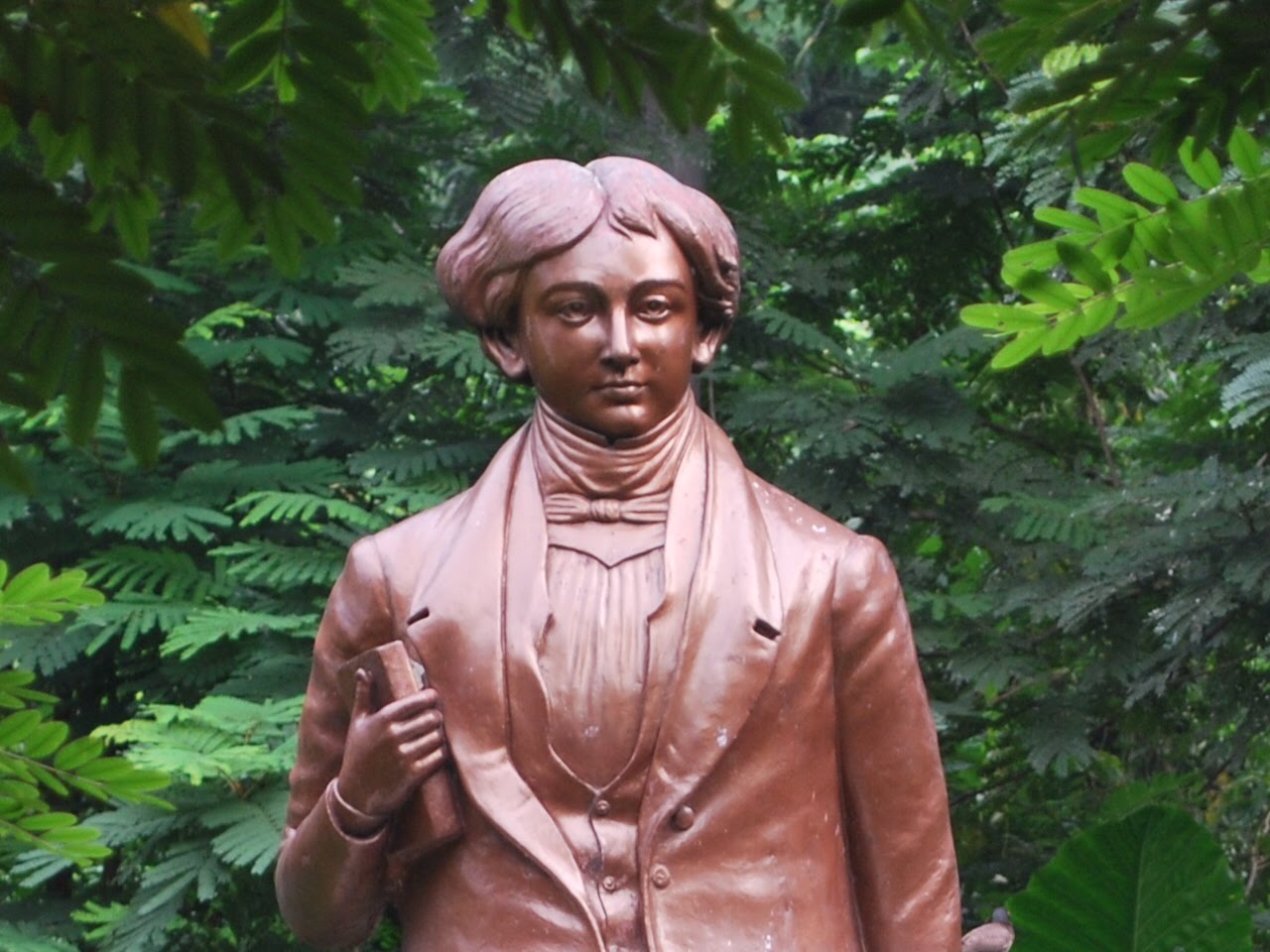
I was walking around Esplanade after a Rasgolla at the famous KC Das, frankly i am not into sweets but make it a point to visit this shop whenever i am in Kolkata as also a cup of tea and some savoury at the alley nearby. The hygiene standards of the street food shops are quite low (think about it how can you have barber shop next to an open eatery?), i always thought it is the duty of government to enforce these and close the shops that don’t adhere. Kolkata (indeed Bengal) despite its pretensions of communism and egalitarian ideals is remarkably feudal place (unlike Kerala...this blogger has written about it few years ago), it is in the nature of feudal societies that elite tend to be complacent (i am sure our PM Mr. Manmohan Singh will agree to that!), and democracy happen to suit the purpose remarkably. Let’s leave it at that, so i was saying i was walking around the place and came across this statue of what looked like a boy holding a book in colonial British attire. Henry Louis Vivian Derozio, a long name that one but i do have vague recollection of having read him in school History text book. It was time for rediscovery.

Henry Louis Vivian Derozio (1809-1831) was born in Kolkata of Anglo-Portuguese descent. He was pulled out from school at the age of fourteen to join a mercantile firm to follow his father’s footstep to be a clerk. But it didn’t work out for our boy and he was sent to his uncle, an indigo planter in Bihar. The setting suited the lad perfectly he started to write his first few poems and these were published in leading journal’s of the time, two years later he was back in Calcutta as the assistant editor of The India Gazette. Later he was offered a teaching position at Hindu College (founded by none other than social reformer Raja Ram Mohan Roy), the zeal to reform made him encourage inquiry among students, led them to question superstition and other regressive practices, irrationalities. He was quite a sensation and influenced many young Bengalis-they called themselves Derozions. And their motto was He who will not reason is a bigot, he who cannot reason is a fool, and he who does not reason is a slave. But the powerful orthodox Hindus saw to it that he was removed. Derozio went back to journalism and started the newspaper The East Indian, sadly he got cholera and died the same year. He was only Twenty three. Could you believe that he was just Twenty three!. It saddened me lot when i read that. Since he was a Christian apostate, he was denied burial inside the cemetery instead buried just outside it on the road. There is a Derozio memorial college in Bengal on the outskirts of kolkata.

Underneath the statue it reads “Pioneer of 19th century Indian renaissance”, if only he had lived longer...

This poem by Derozio is very much influenced by English Romantics poets, as you read this charming poem you tend to awaken into awareness with the poet

A Walk by Moonlight

Last night-it was a lovely night,
And i was very blest-
Shall it not be for Memory
A happy spot to rest?Yes; there are in the backward past
Soft hours to which we turn-
Hours which, at distance, mildly shine,
Shine on but never burn.

And some these but yesternight
Across my path were thrown,
Which made my heart so very light,
I think it could have flown.

I had been out to see a friend
With whom i others saw:
Like minds to like minds ever tends-
An universal law.

And when we were returning home,
‘Come who will walk with me,
A little way,’ said and lo!
I straight was joined by three:

Three whom i loved-two had high thoughts
And were, in age my peers;
And one was young, but oh! endeared
As much as youth endears.

The moon stood silent in the sky,
And looked upon our earth;
The clouds divided, passing by,
In homage to her worth.

There was a dance among the leaves
Rejoicing at her power,
Who robes for them of silver weaves
Within one mystic hour.

There was a song among the winds,
Hymning her influence-
That low-breathed minstrelsy which binds
The soul to thought intense.

And there was something in the night
That with its magic wound us;
For we-oh! we not only saw,
But felt the moonlight round us.

How vague are all the mysteries
Which bind us to our earth;
How far they send into the heart
Their tones of holy mirth;

How lovely are phantoms dim
Which bless that better sight,
That man enjoys when proud he stands
In his own spirit’s light;

When, like a thing that is not ours,
This earthliness goes by,
And we behold the spiritualness
Of all that cannot die.

‘Tis then we understand the voice
Which in the night-wind sings,
And feel the mystic melody
Played on the forest strings.

The silken language of the stars
Becomes the tongue we speak,
And then we read the sympathy
That pales the young moon cheek.

The inward eye is open then
To glories, which in dreams
Visit the sleepers couch, in robes
Woven of the rainbow’s beams.

I bless my nature that i am
Allied to all the bliss,
Which other worlds we’re told afford,
But which i find in this.

My heart is bettered when i feel
That even this human heart
To all around is gently bound,
And forms of all a part;

That, cold and lifeless as they seem,
The flowers, the stars, the sky
Have more than common minds may deem
To stir our sympathy.

Oh! in such moments can i crush
The grass beneath my feet?
Ah no; the grass has then a voice,
Its heart-i hear it beat.

O what a blessing this poem, what a memorable walk by the moonlight. You could read that last stanza many times, what heightened awareness the poet reached. Brilliant. Aren’t we so very fortunate that we are able to read these lines that were written about two centuries years back?. How much i miss moonlit nights, it’s a luxury these days.

Thursday, September 6, 2012

Baya weaver: the master craftsman


As the name suggests these birds are known for their exquisite nests (like Tailorbird- incidentally I spotted one at turf club shrubs…I am seeing tailorbird after a longtime last spotting probably was at Sultanpur about seven years back!), that are woven out of grass, the long mouth pointing down, they hang from outer bough of trees. To enter these the bird has to shoot up in full flight (tricky that one), making it predator proof. About a decade back I got an abandoned baya nest from bharatpur (we treaded the swamp and had to do some work to pluck it from the tree) that adorn my room for many months. I had plans of lighting it with green lights and so on, during shifting the nest unfortunately got crushed. When you observe these nests minutely you know how intricate piece of work it is, and yes birds don’t have hands that makes it a miracle!. Baya nests are quite common in countryside, so next time you come across one don’t fail to stop and appreciate these little birds.
Baya males acquire a distinctive yellow plume and striking black mask during breeding season. They are found in abundance in open arable field that has few trees, damp areas are preferred. Can cause harm to crops (what is that compared to rotting in godown!!) but does compensate by feeding on caterpillar, grasshopper so on.

Mahadevi Verma

What is pity looking for
in the mirror of raindrops?
What are waves searching
in the throbs of the sea

Mahadevi Verma (1902-1987) was major Indian Hindi poet, married at early age she rebelled against child marriage and pursued higher studies, later was active in freedom struggle. She was awarded the highest literary award in the country: the Jnanapeedam (or Jnanpith, as north Indian put it) in 1982. Mahadevi Verma belonged to the Chhayavad school of Hindi poetry, other important poets of this school included Jayashankar Prasad, Suryakant Tripathi “Nirala” and Sumithrananadan Pant…all these poets we have studied in school. Chhayavad was more in line with Romantic school of the west, the emphasis was on nature, ‘Chhaya’ being shade-implying nature as comforter and partaker of joy and sorrow, an unfailing companion. The poems exemplified fineness of sentiments and lyricism (of course lost in English translation), these lines from her poem “Ever vigilant eyes

Has storm slept with soft breeze as pillow?
Has the curse of the world come as everlasting sleep?
Why does the child of immortality want to embrace death?
Wake up, you have far to go.

Chhayavad had strong current of humanism that is universal, unrestricted and all embracing. Mahadevi Verma had immense understanding of Vedic and other ancient philosophies. One can observe traces of Vedic tradition in her poems-seeing formless in tangible, abstract in concrete. There is a strong element of bhakti school too, the overwhelming presence of divine love and longing (it needs Indian mind to understand, for most in West life began and end with Freud !!. Pity)
Lord, the distance between us is full of joy,
the moment I came in contact with you
all my dream-world will be shattered,
but even so I do not wish
to be away from you

These from another poem

When the sea tremble like a pearl
in the golden shell formed by the earth and the sky,
and the cloud float like soft cluster of snow
in the brightness of silver sea,
the like fragrance one who gently caresses me-
who is he like a breath emitted during my slumber?

These lines from the poem “Gathering like clouds

When could the fiery rays of the sun
take away compassion from my heart,
when could the beautiful stars in the sky
deviate me from my path?
The pride of majestic sky I brought
upon the earth and it brightened the world.

These lines from “If you do not grapple

If you do not grapple with
the rising waves of the sea,
which tide will take you
across on the other side?
….
The eyes of idol god shine bright with the light of the lamp,
and its rays come as a blessing to the temple priest,
will not the fiery laughter erase the traces
of destruction carved on the hard rocks?